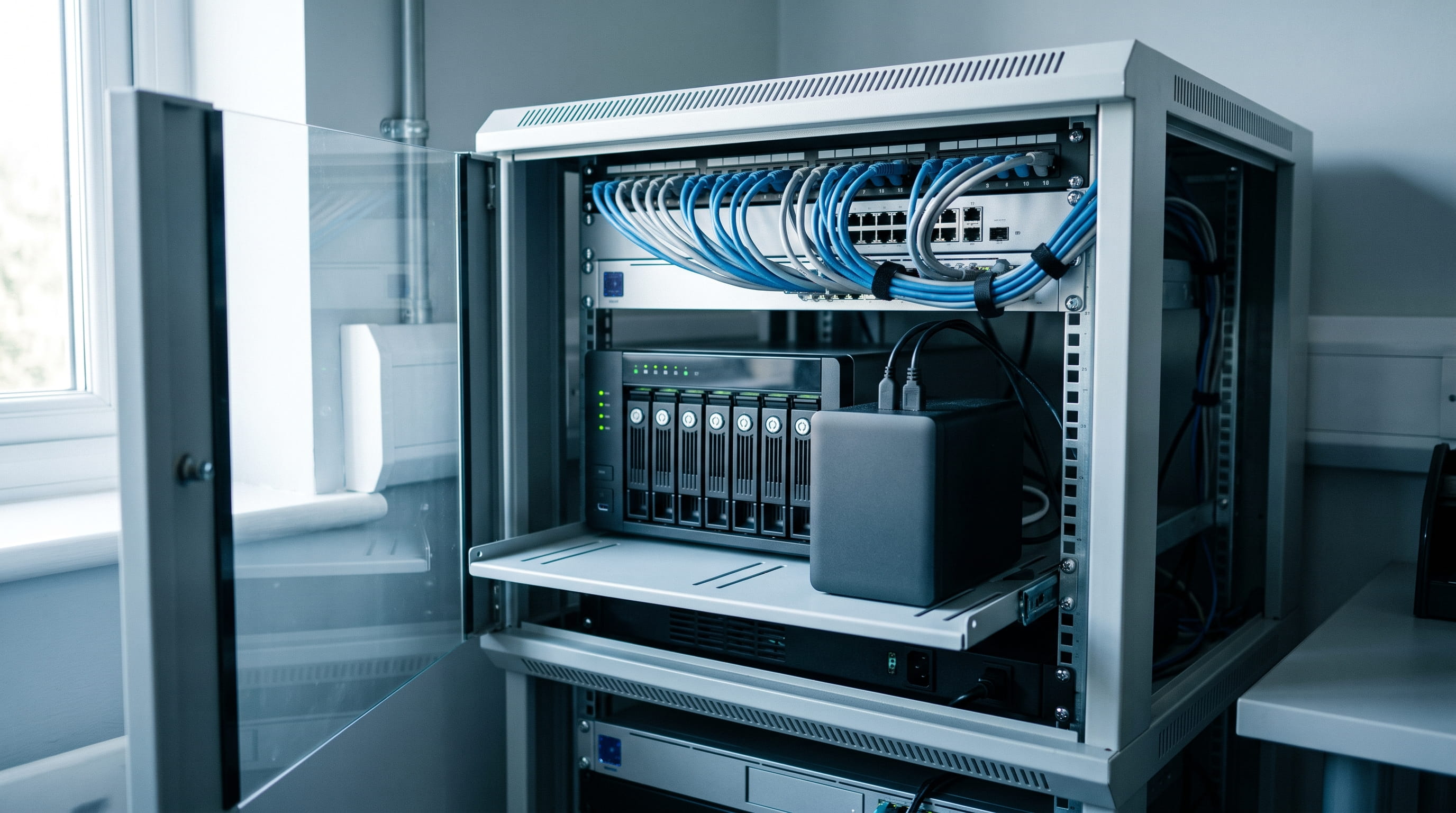
Why does the connection to the server fail in the first place? Almost always, it comes down to a single problem: the device in front of you cannot talk to the system it is trying to reach. That system might be a website, your email server, a line of business application, a shared drive, or your company VPN. The message itself rarely tells you why, which is exactly what makes it so frustrating.
The good news is that most of these failures fall into a short list of causes, and you can work through them in a logical order. This guide walks you through that order, from the thirty-second checks to the deeper fixes, and shows you when the sensible move is to stop and call your IT support team.

What does the "connection to server failed" error actually mean?
In plain terms, "connection to server failed" means your device sent a request to a server and got nothing usable back. The breakdown can sit at any point in the chain: your own device, your local network, the route between you and the server, or the server itself.
You will usually see one of a few symptoms:
- An explicit error such as "server not found," "connection timed out," or "cannot reach the server"
- A single app or website failing while everything else works, which points to a localised problem
- A slow, hanging connection that never fully loads, which can signal an overloaded server or a flaky route
Knowing whether the problem is on your side or the server side is the single most important thing to establish, because it tells you whether you can fix it yourself in two minutes or whether you are waiting on someone else.
Is it your device or the server? Two quick checks first
Before changing any settings, rule out the obvious.
Try a second device on the same network. If your laptop fails but your phone connects fine over the same Wi-Fi, the fault is on your device, not the network. If every device fails, the problem is the network or the connection itself.
Try a different site or service. If only one application or website is unreachable while others load normally, the issue is almost certainly that specific server, not you.
These two checks alone will tell you which half of this guide you actually need.
How do you fix the "connection to server failed" error, step by step?
1. Confirm your internet connection is live
A stable connection underpins everything else, so confirm it first. Open any reliable website to see whether the internet is working at all. If nothing loads, restart your router: unplug it, wait about ten seconds, then plug it back in and give it a minute to reconnect. While you wait, check that the cables to your modem and router are secure, and if you are on Wi-Fi, move closer or switch to a wired connection to rule out a weak signal.
2. Check whether the server itself is down
If your internet works but one service is unreachable, the server may be the problem, not you. Tools like DownDetector or IsItDownRightNow show whether it is down for everyone or just you. For a service your business runs in-house, check it directly. For a third-party platform, their status page confirms any outage, so you avoid reconfiguring your machine needlessly.
3. Restart the device
It sounds too simple to matter, but a reboot clears stuck processes, releases stale network connections, and resets background services that may be holding things up. Restart the affected device, whether that is a desktop, laptop, tablet, or phone, before you move on to anything more technical.
4. Flush your DNS cache
Your device stores DNS records (the address book that turns a domain name into a server address). If those stored records are outdated, your device may keep trying to reach an old or wrong address, producing a connection failure even when everything else is healthy. Clearing the cache forces a fresh lookup.
- Windows: Press the Windows key and R, type cmd, and press Enter. In the Command Prompt, type ipconfig /flushdns and press Enter.
- Mac: Open Terminal and run sudo killall -HUP mDNSResponder, then enter your password.
5. Review your firewall and antivirus
Security software sometimes blocks legitimate traffic by mistake. To test this, temporarily disable your firewall or pause your antivirus, then try the connection again. If it works, you have found the cause. Re-enable protection and add a proper rule or exception rather than leaving security off. On a managed business device, do this with IT, as firewall rules often exist for a reason.
6. Check your proxy settings
If your device routes traffic through a proxy server, an incorrect or outdated proxy setting will stop it reaching the destination. On Windows, open your network settings and review the proxy configuration. On Mac, go to System Settings, then Network, and check the proxy options for your active connection. Unless your organisation specifically requires a proxy, disabling unnecessary ones often restores the connection.
7. Verify your IP configuration
A bad IP address blocks server access entirely. On Windows, open Command Prompt and type ipconfig. If your address begins with 169.254, your device failed to get a proper address from the network and assigned itself a fallback one, which will not connect to anything. Running ipconfig /release followed by ipconfig /renew usually fixes it. On Mac, open System Settings, then Network, and renew the lease or reset the connection to automatic.
8. Update your network drivers
Outdated or corrupted network drivers can quietly break connectivity. On Windows, open Device Manager, expand Network adapters, right-click your adapter, and choose Update driver. On Mac, driver updates ship inside system updates, so check System Settings and then Software Update.
9. Test on a completely different network
If you have exhausted the steps above, connect through a different network such as a mobile hotspot and try again. If the server is reachable there, the fault lies with your original network rather than your device or the server. This is the cleanest way to isolate the problem before escalating.
When should you stop troubleshooting and call IT support?
Self-service has limits, and for a business, those limits matter. Escalate to your IT support team when:
- Standard troubleshooting has not resolved it within a few minutes
- More than one person is affected, which usually points to a network, server, or configuration issue rather than a single device
- The affected system is business critical, such as email, your CRM, accounting software, or a shared file server
- The failure is intermittent and keeps returning, which often signals a deeper infrastructure or security problem
When you do escalate, save time by noting the exact error message, which devices and people are affected, and the steps you have already tried. Persistent failures can indicate misconfiguration, hardware nearing failure, or in some cases a security incident, and these need proper diagnostics rather than guesswork.
How do you prevent connection failures in the first place?
For a business, the cheapest server failure is the one that never reaches your staff. Proactive monitoring catches degraded hardware, expiring certificates, and capacity issues before they cause downtime. Well documented network configurations, sensible firewall rules, and a clear escalation path mean that when something does break, it is diagnosed in minutes rather than hours. That is the difference between a minor interruption and a day of lost productivity across the office.
Get an IT Plan Today!